Bed bugs pose a significant threat to households due to their rapid reproduction and ability to hide in small spaces. Effective management requires specialized pest control services, particularly through advanced methods like heat treatment.
This technique not only disrupts the bugs' biological functions but also guarantees thorough eradication.
Understanding the intricacies of professional interventions reveals why these services are essential, especially when compared to ineffective DIY approaches. What are the key benefits of opting for expert assistance?
The pervasive threat of bed bugs poses significant challenges to homeowners. These resilient pests can infiltrate homes through various means, such as luggage, clothing, and second-hand furniture, making their presence difficult to detect until infestations are well-established. Bed bugs feed on human blood, leading to uncomfortable bites that often result in itching and allergic reactions, disrupting sleep and overall well-being.
Moreover, the psychological impact of a bed bug infestation cannot be underestimated. Homeowners may experience anxiety and distress, fearing the stigma associated with these pests. Additionally, bed bugs reproduce rapidly, leading to exponential population growth if not addressed promptly.
Their ability to hide in tiny crevices further complicates eradication efforts. Without effective intervention, bed bugs can lead to costly treatments and damage to personal belongings. Understanding the seriousness of this threat is essential for any homeowner aiming to maintain a safe and comfortable living environment.
Addressing a bed bug infestation requires more than just vigilance; it often necessitates the expertise of professional pest control services. These professionals bring specialized knowledge and training that allow them to identify the extent of the infestation accurately and implement effective treatment strategies. Their access to advanced tools and technologies, such as heat treatment, guarantees a more thorough eradication of bed bugs than conventional methods.
Moreover, professional services provide a tailored approach, evaluating individual circumstances and environments to create a customized plan that addresses specific needs. This not only enhances the effectiveness of the treatment but also reduces the likelihood of future infestations.
Additionally, pest control experts offer valuable advice on preventative measures, helping homeowners maintain a bed bug-free environment. Ultimately, engaging professional pest control services can save time, reduce stress, and provide peace of mind, ensuring a thorough resolution to a challenging problem.
DIY solutions for bed bug infestations often prove inadequate due to a lack of specialized knowledge and resources. Homeowners may rely on over-the-counter insecticides or homemade remedies, which can be ineffective against these resilient pests. Bed bugs are adept at hiding in small crevices, making it challenging for individuals to locate and treat all infested areas.
Additionally, improper application of DIY treatments can lead to the bugs developing resistance, complicating future eradication efforts. Many DIY methods do not address the entire life cycle of bed bugs, leaving behind eggs that can hatch and reignite the infestation.
Without experience in pest management, individuals may misidentify bed bugs and confuse them with other pests, leading to ineffective strategies. Consequently, the complexity of bed bug behavior and the limitations of DIY approaches highlight the importance of professional pest control services for successful eradication.
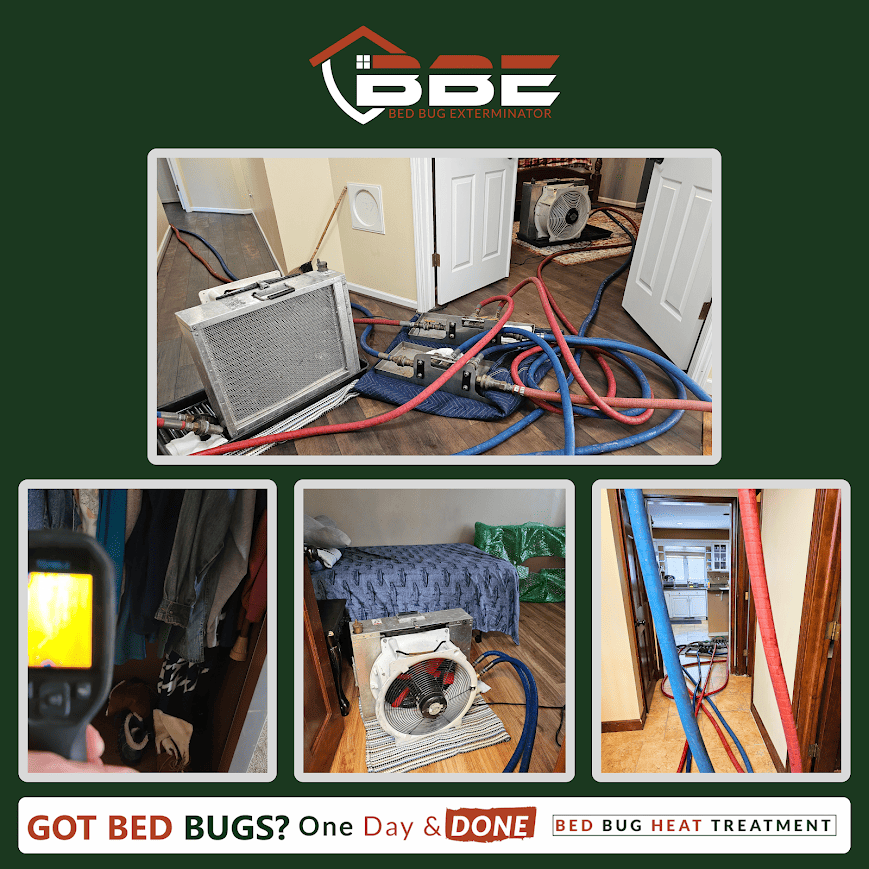
Effective pest control relies on understanding how heat treatment eliminates bed bugs through principles of heat penetration. This method utilizes elevated temperatures to disrupt the biological functions of bed bugs. Heat penetrates various materials, including bedding and furniture, reaching often hidden infestations.
The effectiveness of heat treatment hinges on the uniformity of temperature distribution throughout the infested area, ensuring that all life stages-eggs, nymphs, and adults-are exposed to lethal conditions.
Properly calibrated equipment maintains a consistent heat level, allowing for thorough penetration into cracks, crevices, and other hard-to-reach spaces. This precision is essential for ensuring that the treatment is both efficient and effective, minimizing the likelihood of any surviving bed bugs that could lead to reinfestation.
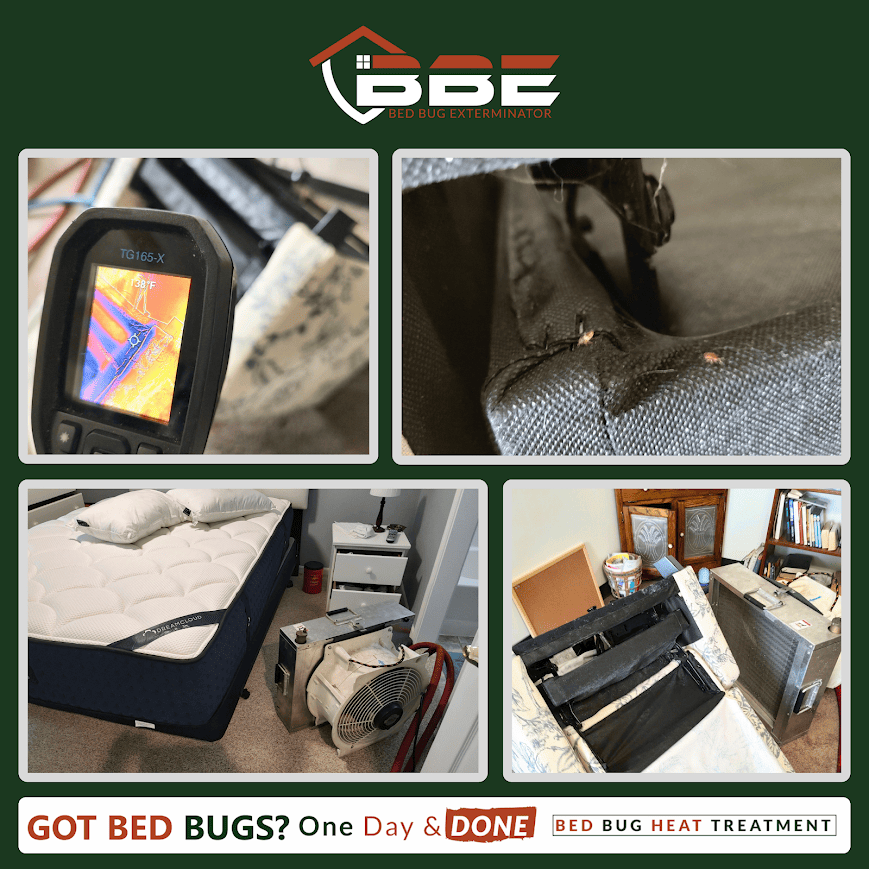
Understanding the specific temperature ranges required for effective bed bug elimination is vital for successful heat treatment. Research indicates that bed bugs and their eggs must be exposed to temperatures between 113°F (45°C) and 118°F (48°C) for a minimum of 90 minutes to guarantee complete eradication.
At 122°F (50°C), immediate mortality occurs within minutes. However, maintaining consistent temperatures throughout the infested area is essential, as cooler spots can allow bed bugs to survive. Professionals often employ specialized equipment to monitor and adjust temperatures to optimize effectiveness.
This precision helps to eliminate not only adult bed bugs but also their eggs and nymphs, ultimately providing thorough pest control and markedly reducing the likelihood of reinfestation.
When tackling bed bug infestations, guaranteeing safety during heat treatment is paramount. Proper preparation is essential; residents should remove heat-sensitive items, including electronics, plants, and food. This step prevents damage and contamination. Additionally, it is vital to confirm that the treatment area is well-ventilated. High temperatures can pose risks, so maintaining airflow is important for safety.
Individuals must also consider the safety of pets; they should be relocated to a safe environment during the treatment process. Moreover, operators should wear appropriate protective gear, including gloves and masks, to guard against potential hazards.
After treatment, it is advisable to wait a specified duration before re-entering the area. This waiting period guarantees that the environment has cooled down adequately and any residual effects of the treatment have dissipated. Following these essential safety tips will help secure a successful and safe heat treatment for bed bug management.
Heat treatment typically takes between six to eight hours to effectively eliminate bed bugs. The duration may vary based on the severity of the infestation and the size of the treated area, ensuring thorough heat penetration.
Heat treatment typically does not damage furniture or belongings, as professional pest control services carefully monitor temperatures. However, sensitive items like electronics or certain fabrics may require special attention to prevent potential heat-related issues.
Heat treatment can affect pets if they are present during the process. It's crucial to remove pets from the area being treated to guarantee their safety, as high temperatures may pose health risks to them.